Category Milestones Show all
-
Construction ahead of schedule! A major milestone for the new hospital
Share Construction ahead of schedule! A major milestone for the new hospital on Facebook Share Construction ahead of schedule! A major milestone for the new hospital on Twitter Share Construction ahead of schedule! A major milestone for the new hospital on Linkedin Email Construction ahead of schedule! A major milestone for the new hospital link
Some exciting news about the new Dawson Creek & District Hospital project! Construction is progressing ahead of schedule and as a result, we've received notice from Graham Design-Builders that the substantial completion date has moved from November 30, 2026 to September 29, 2026—two months ahead of schedule!
Advancing the substantial completion date is a major achievement—and a testament to hard work by many partners and contributors. It brings us significantly closer to opening a brand new, state-of-the-art hospital that reflects the needs, values, and cultures of Dawson Creek and the Peace Region.
What does “substantial completion” mean?
Substantial completion marks the point when the building is sufficiently complete and safe for Northern Health to take ownership of the facility. While there may still be minor finishing touches, cleanup, or adjustments required, the hospital is considered fully constructed with functioning systems.
In practical terms, this is when Graham formally hands over the building—keys included—and Northern Health assumes responsibility for preparing the hospital for patient care.
What does this mean for opening day?
Because construction is ahead of schedule, our Go-Live / Opening Day will also be earlier than planned. There’s still work and planning to be completed prior to determining the new opening day date. But we’ll provide an update once we know more!
What happens between substantial completion and opening day?
Once we receive the keys to the building, we enter a critical activation and transition phase. These months are essential to ensuring that our physicians, nurses, support staff, and operational teams are fully prepared to deliver care in the new space.
A lot of work happens behind the scenes before the hospital opens its doors to patients, which includes:
✔ Staff Training, Orientation, and Education
- Staff will receive in-depth training on new equipment, updated workflows, safety procedures, and the layout of the facility.
- Teams will learn how to work in their new environment and adapt to redesigned workflows so they’re confident and well‑prepared.
- Staff will take part in hands‑on learning to ensure safe, high‑quality care from day one.
✔ Simulation and Dry-Run Exercises
- Teams practice real-world scenarios to ensure that care is delivered safely, efficiently, and consistently from day one.
- These exercises help identify gaps, test new processes, uncover concerns, and build staff confidence.
- This may include simulations of emergency codes and responses, patient journeys, interdepartmental coordination and patient workflows, patient transport routes for move day, testing wayfinding and routing, and much more.
✔ Furniture and Equipment Installation
- From beds to technology to medical equipment, everything must be installed and tested before we can welcome patients.
✔ Systems Testing & Safety Checks
- IT systems, emergency responses, mechanical systems, and clinical workflows undergo rigorous testing. Remaining deficiencies are corrected, systems are re-tested, and the building is prepared to welcome patients and families.
- This careful and deliberate preparation ensures that the hospital is fully equipped, staff are supported, and patient safety is at the center of every decision.
- We look forward to sharing more updates as we move through this exciting next phase of the project.
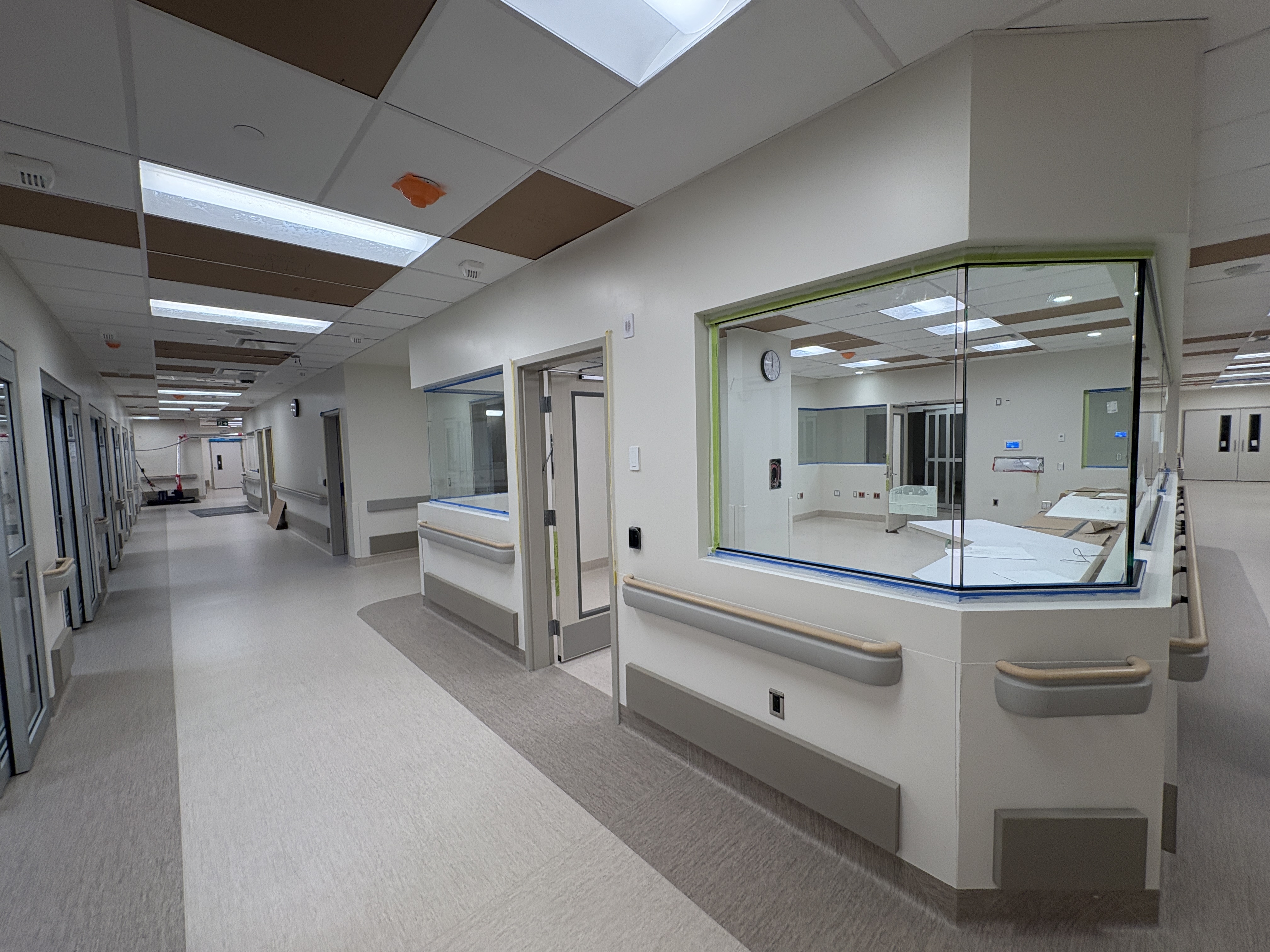
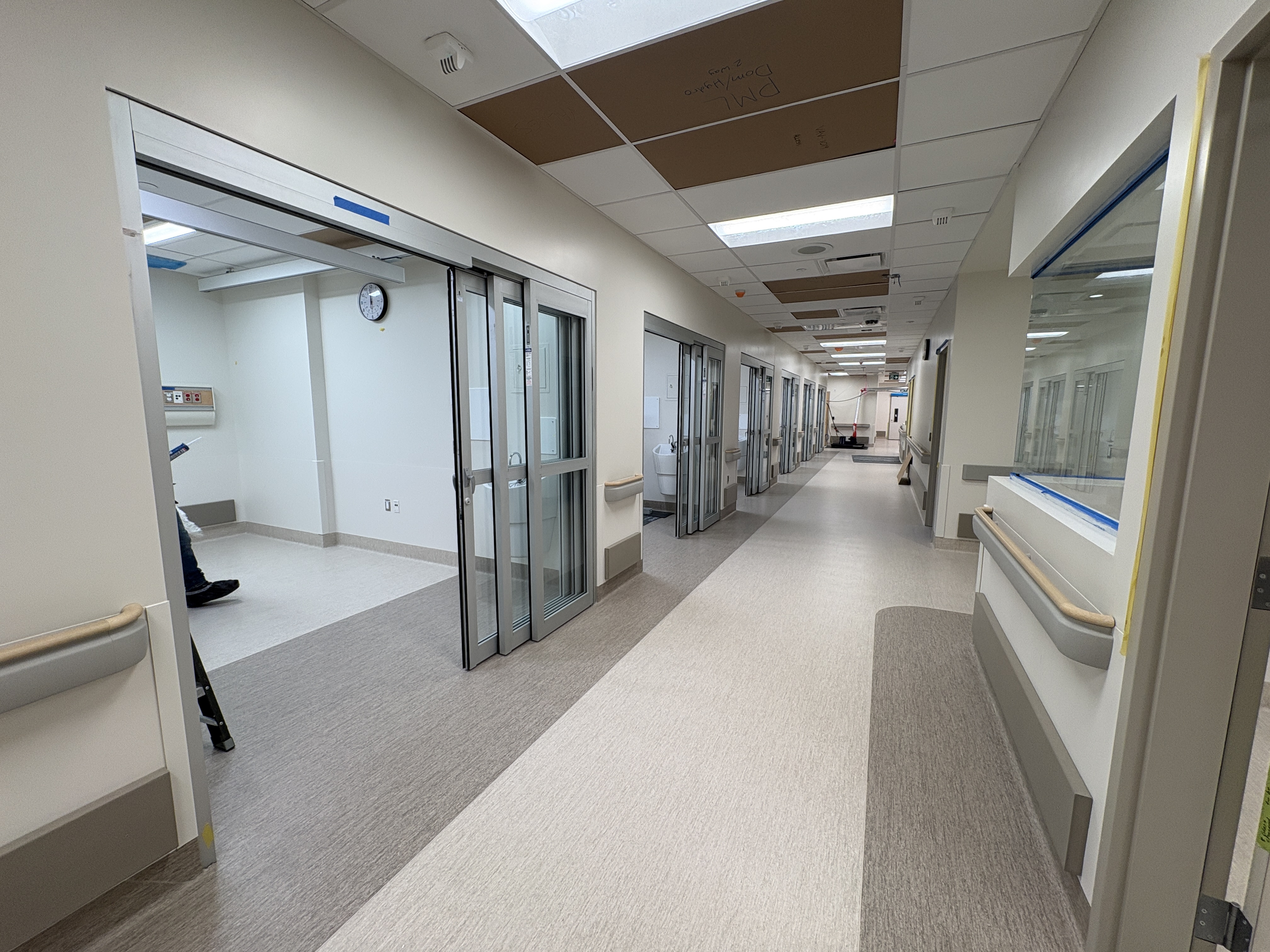
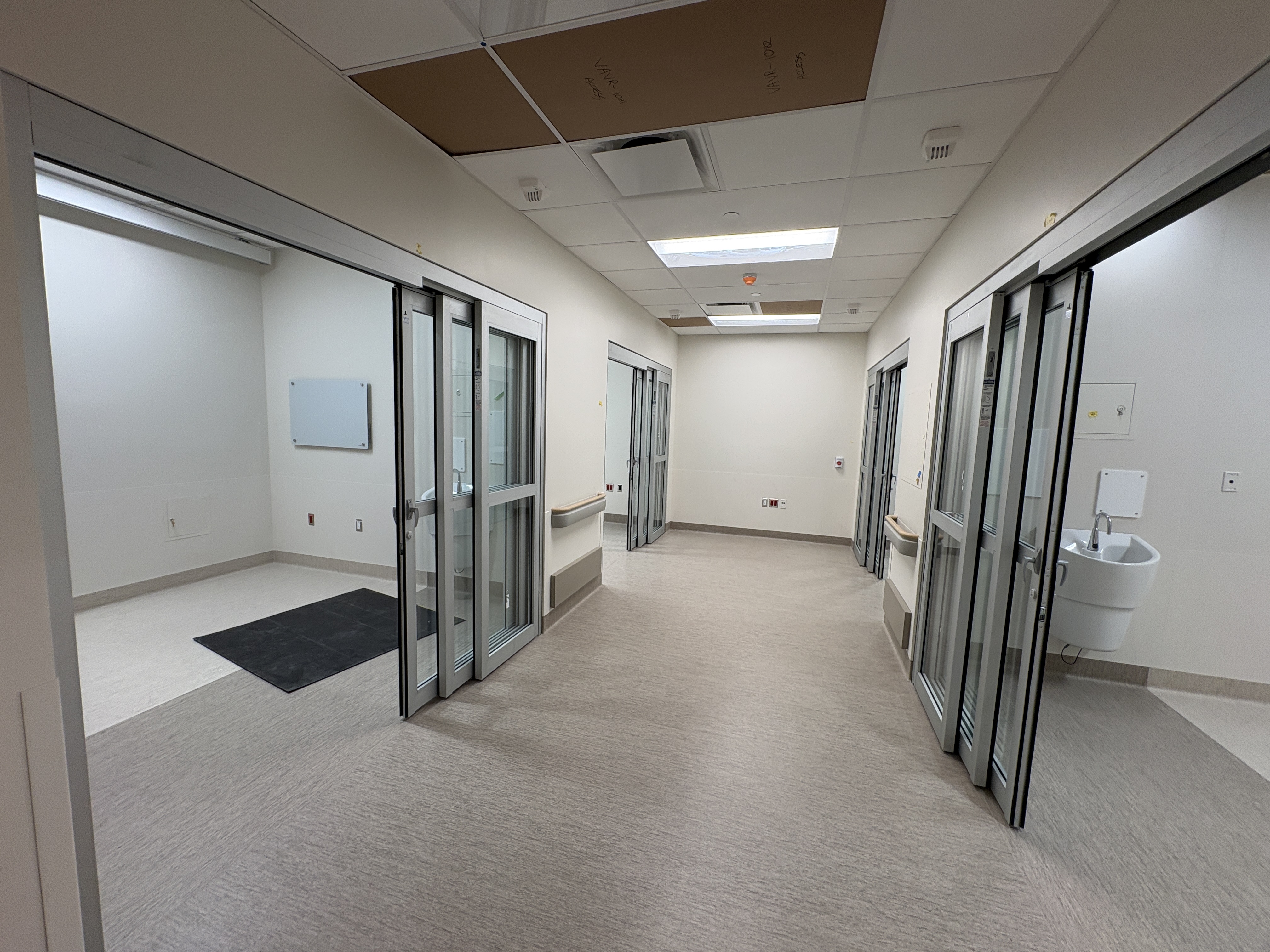
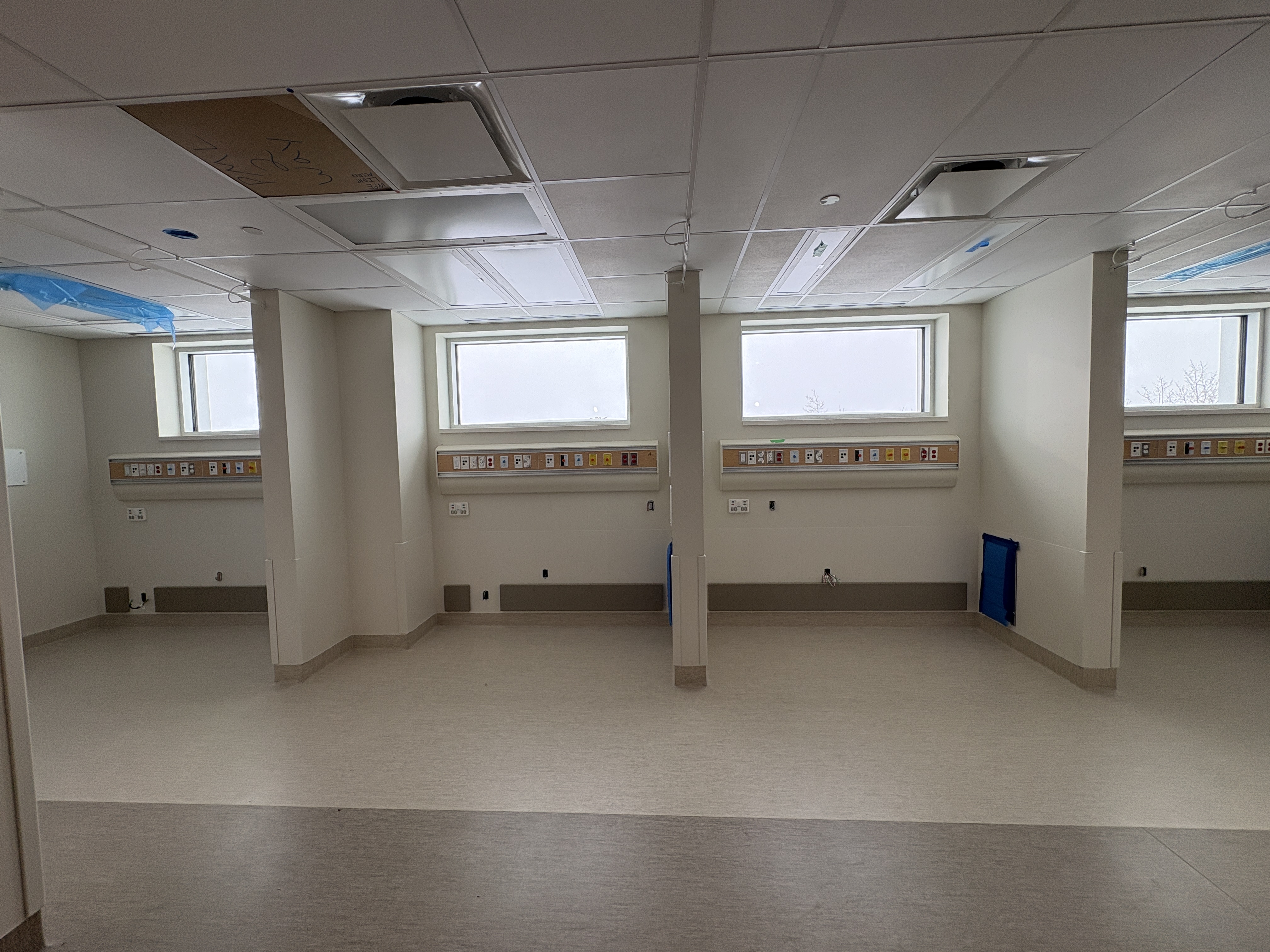
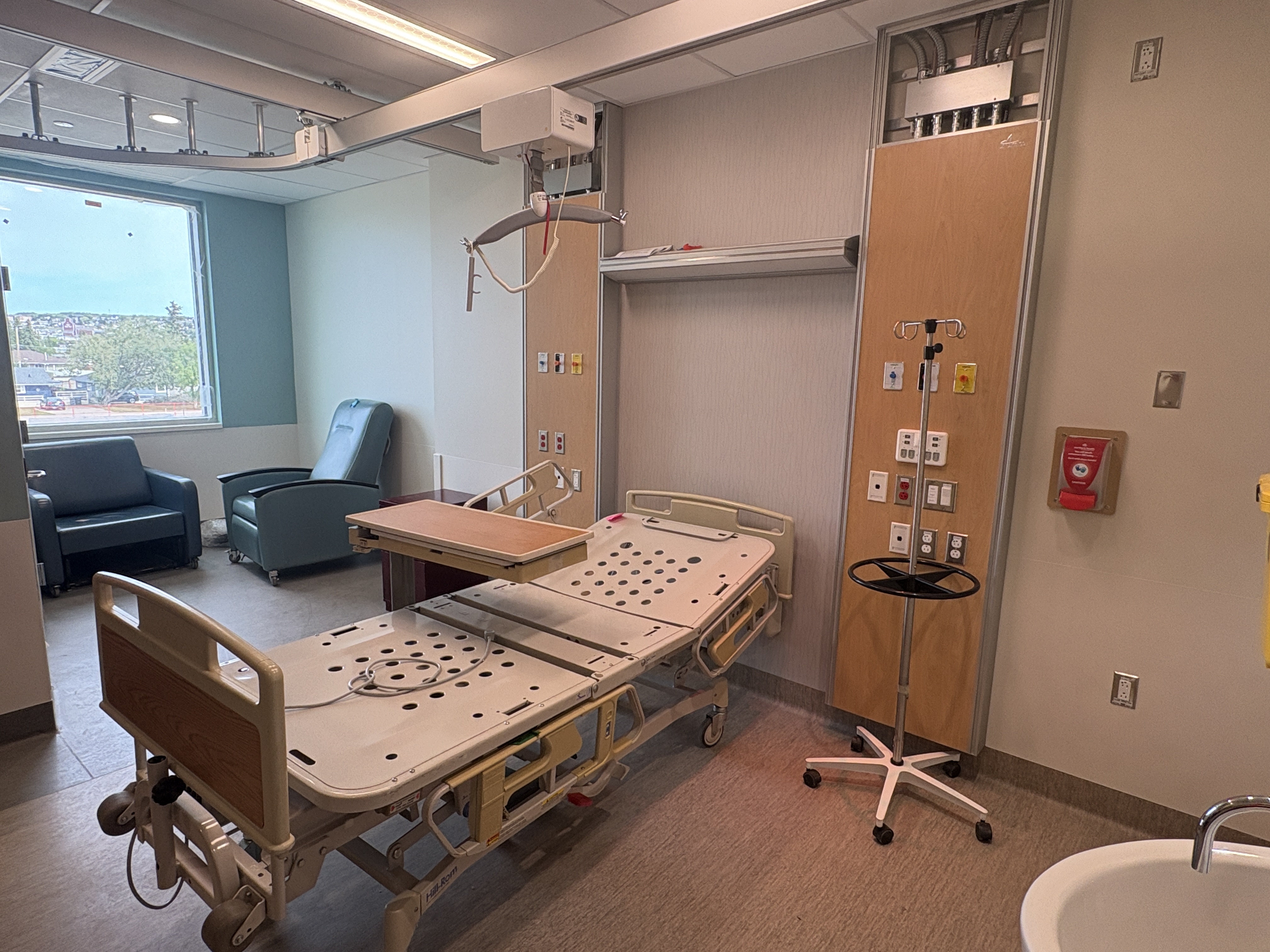
Emergency department - treatment rooms (left), care station (right)
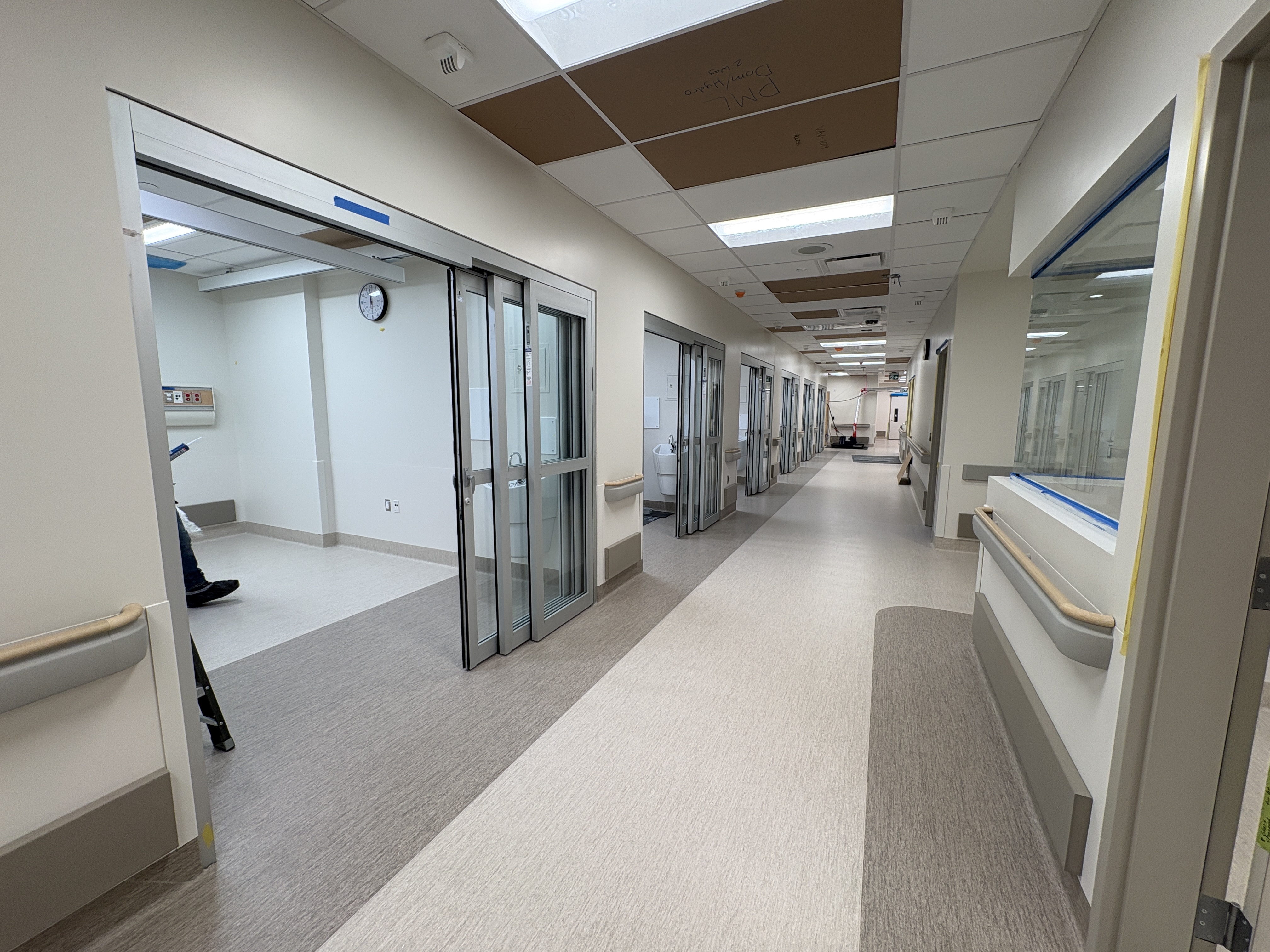
Emergency department - treatment rooms
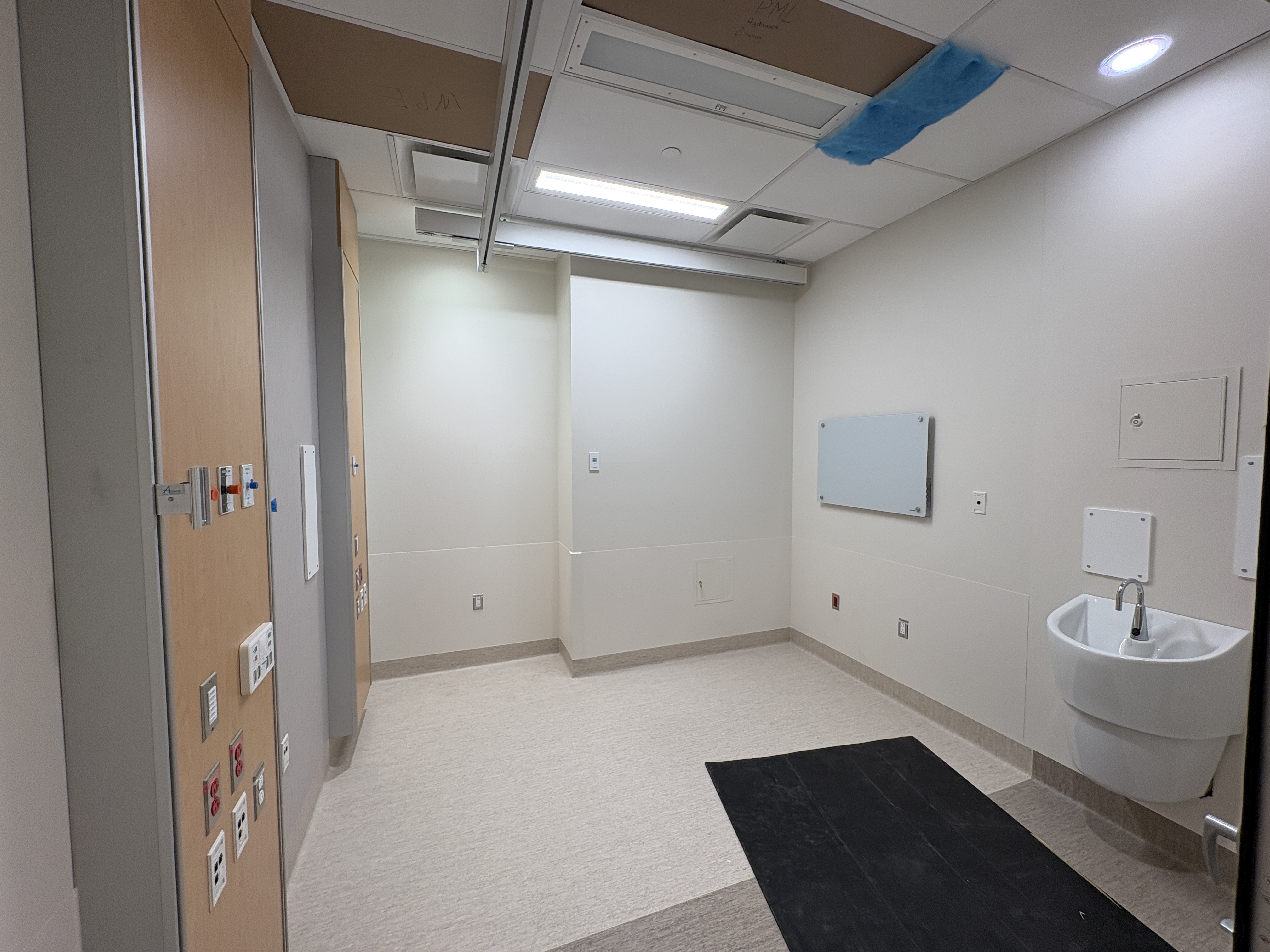
Emergency department - Clinical decision unit treatment spaces
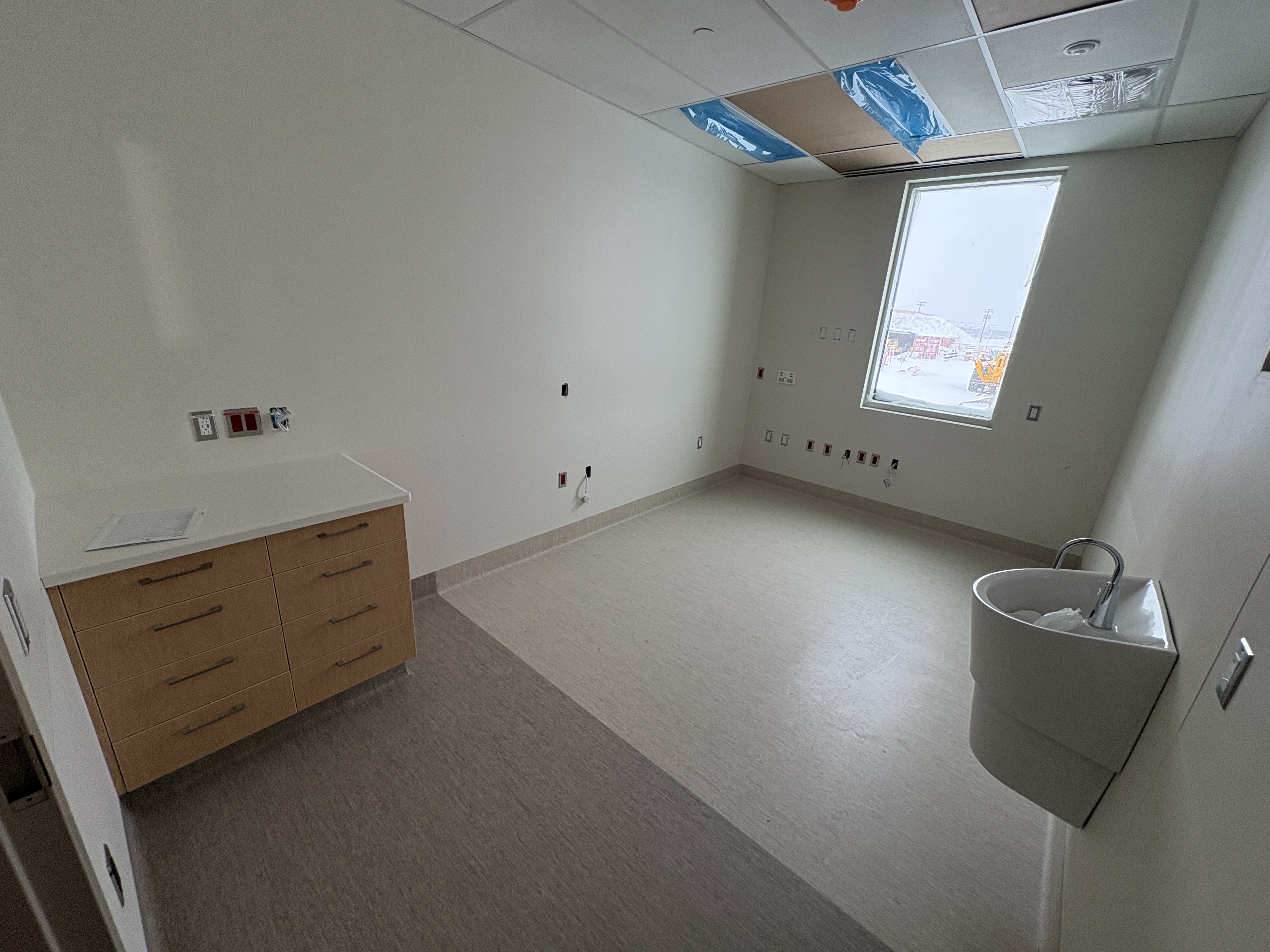
Clinical decision unit treatment space
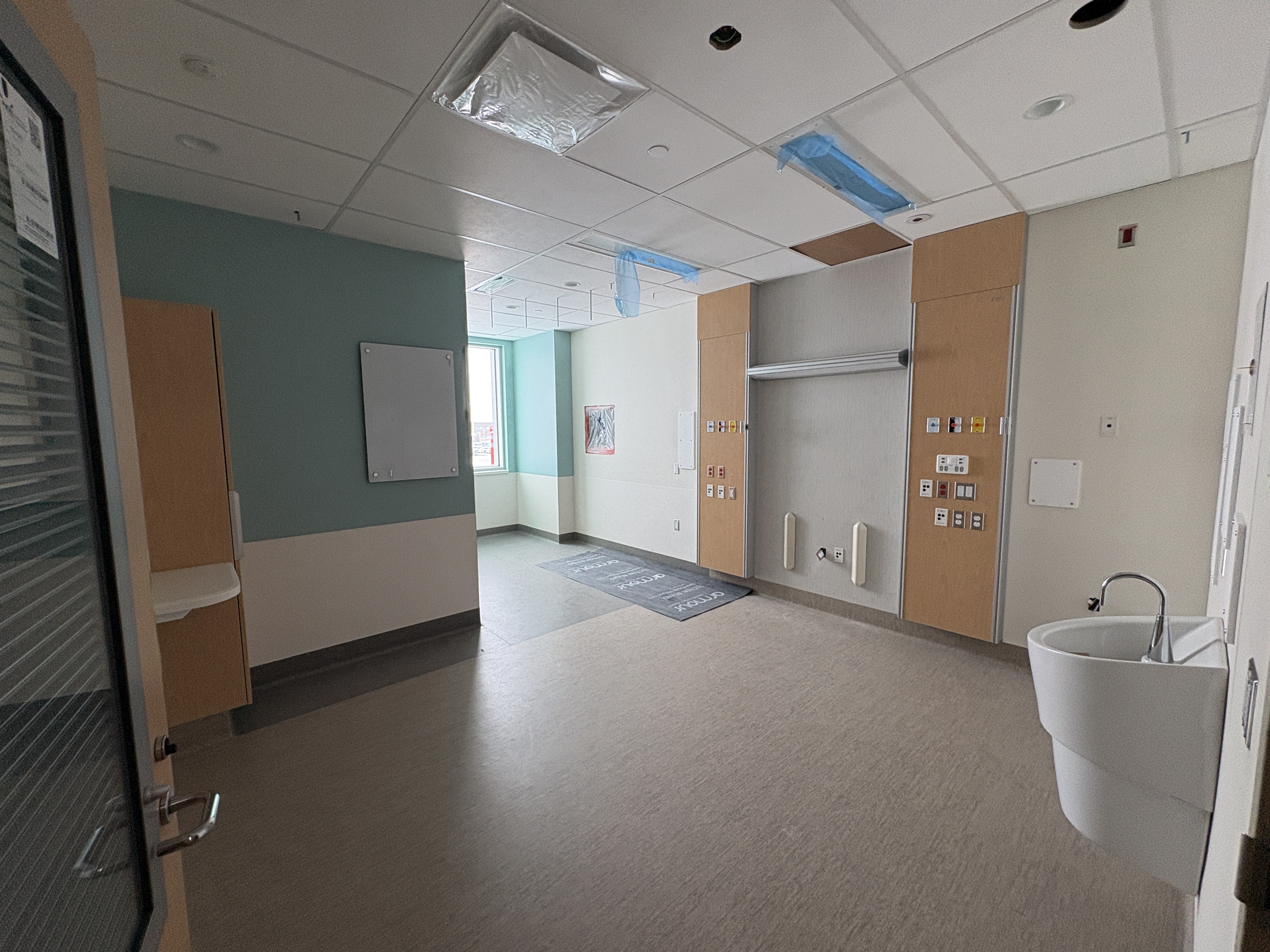
Inpatient unit room
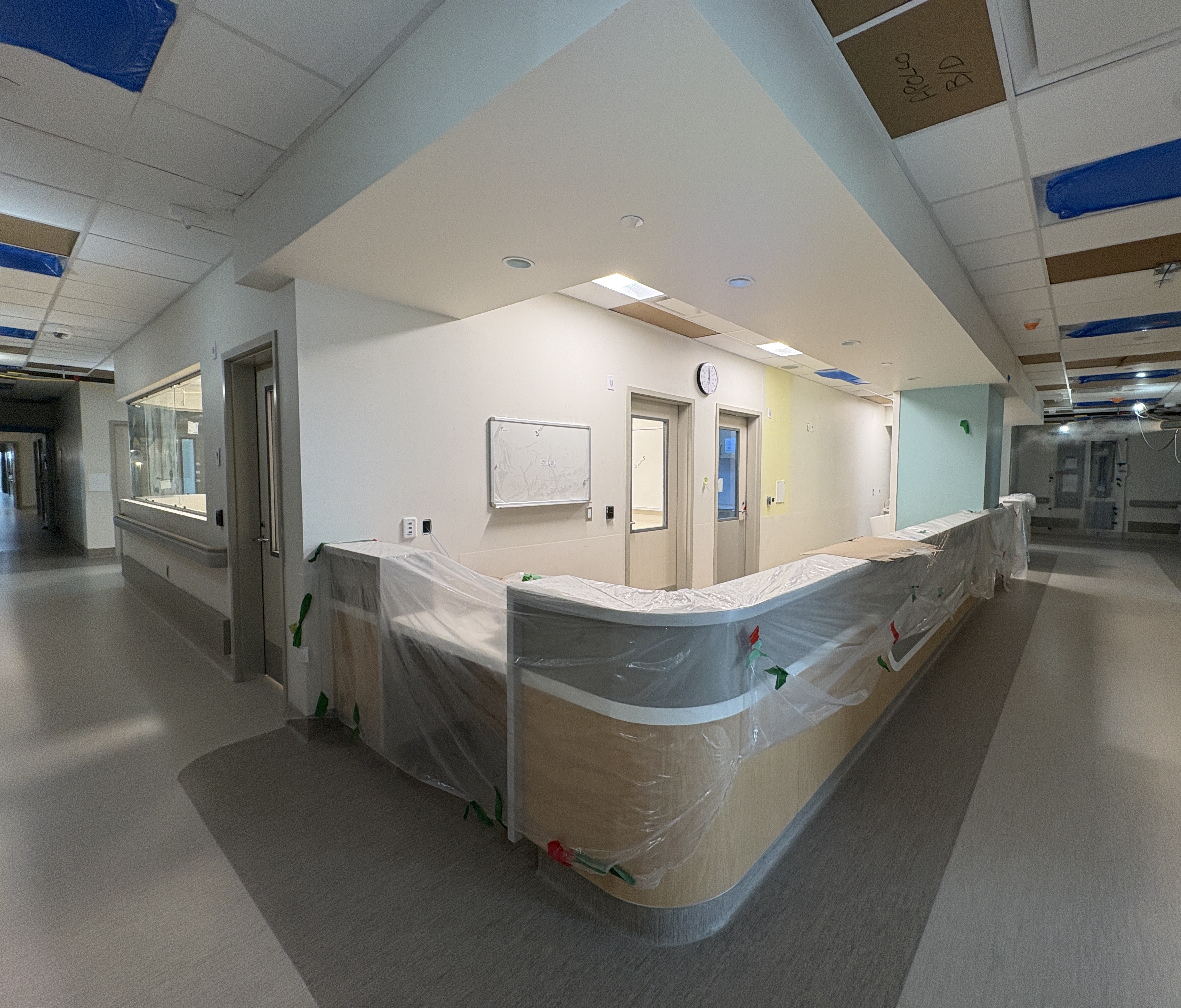
Maternity unit - Care station
Surgery - pre- and post-op treatment spaces
Visiting specialists treatment roomThank you for your contribution!
Help us reach out to more people in the community
Share this with family and friends
No thanks -
Health Care Relocations (HCR) onboarded and getting ready for the big move
Share Health Care Relocations (HCR) onboarded and getting ready for the big move on Facebook Share Health Care Relocations (HCR) onboarded and getting ready for the big move on Twitter Share Health Care Relocations (HCR) onboarded and getting ready for the big move on Linkedin Email Health Care Relocations (HCR) onboarded and getting ready for the big move link
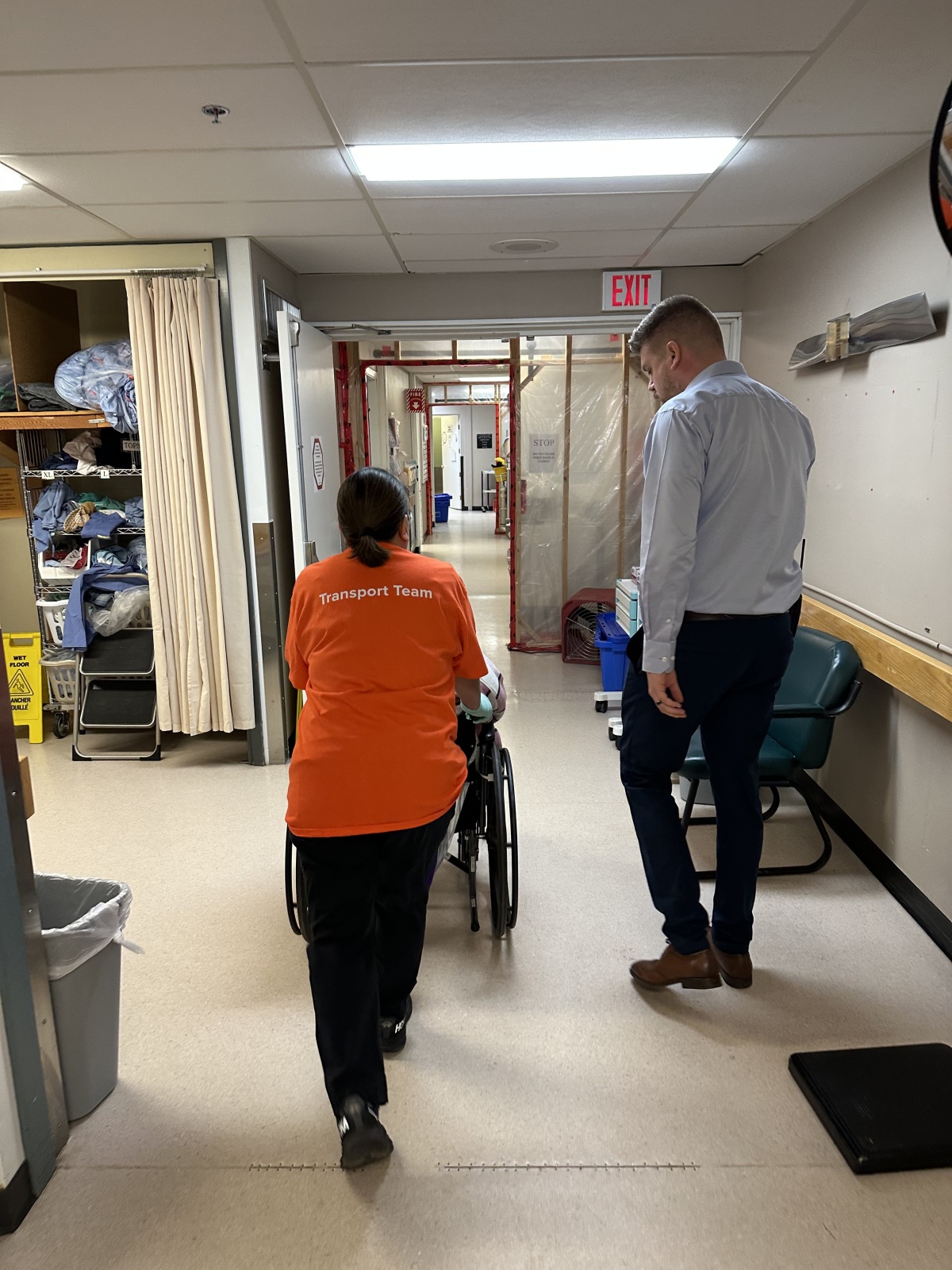
Planning is well underway to ensure a safe and seamless transition for patients, staff, and services when we move into the new hospital.
We’re excited to share that Health Care Relocations (HCR) has been onboarded to guide us through every step of this process.
Health Care Relocations (HCR) is a specialized organization with decades of experience helping hospitals and health facilities relocate efficiently and safely. HCR has been operating since 1993 and has successfully managed over 500 relocations across four continents. Their expertise includes developing relocation strategies, coordinating patient transfers, and minimizing disruption to essential services. Moving into a new hospital is more than packing boxes—it’s a carefully coordinated effort designed to keep patient care at the forefront.
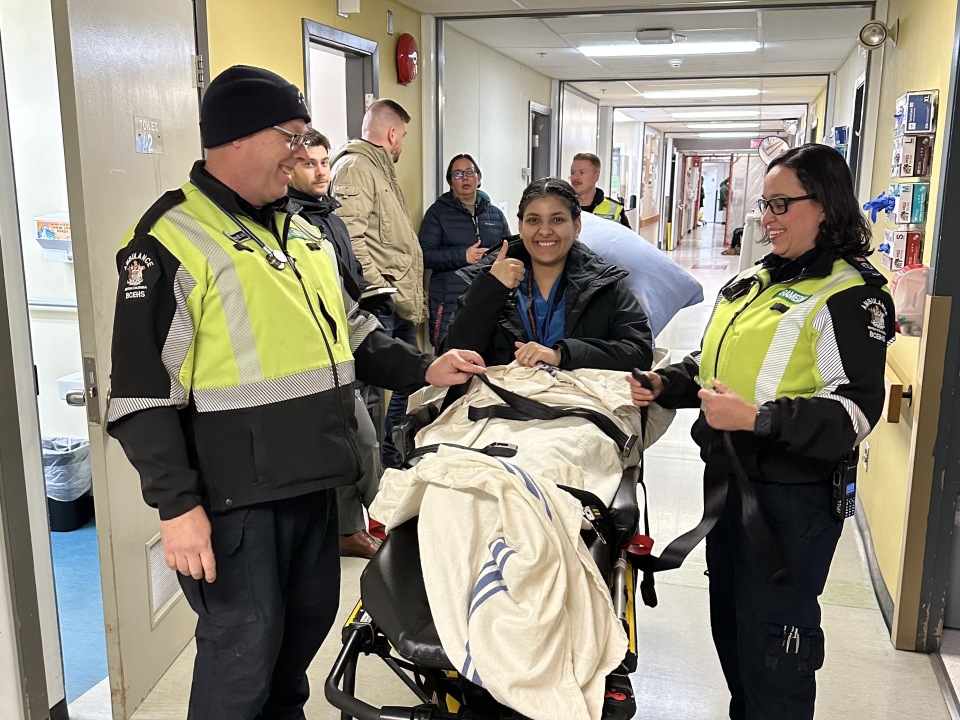
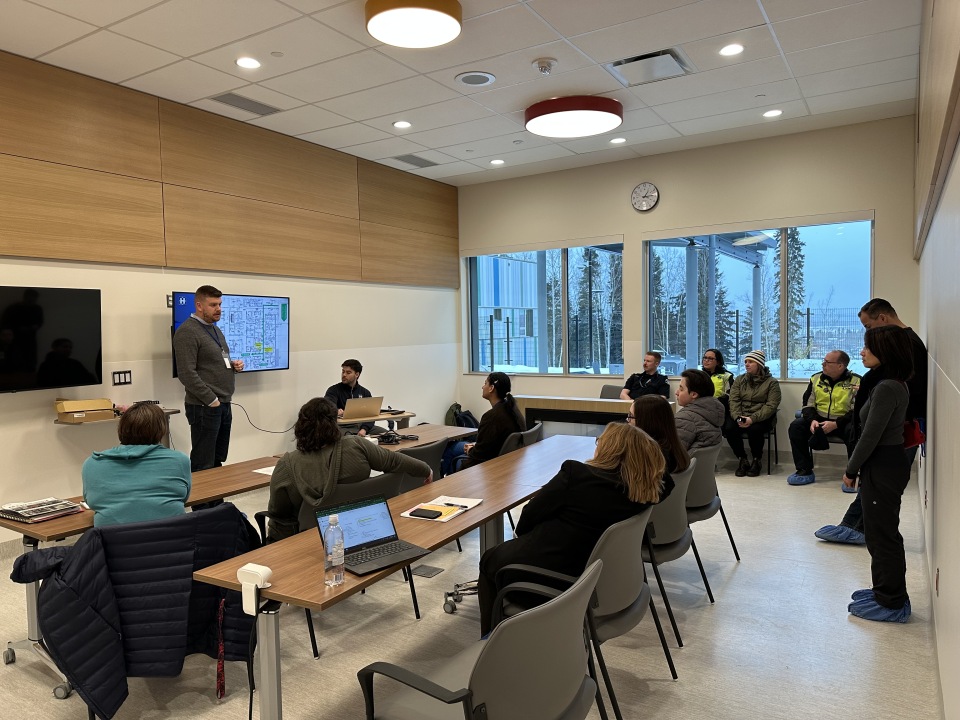
In December, the HCR team was on-site in Dawson Creek to meet with leaders and managers and complete initial departmental walkthroughs. These visits help determine what equipment will move, what needs to be purged or replaced, and how to sequence moves to minimize disruption.
Over the coming months, HCR will develop a move calendar, detailed department move plans, and a move information guide to keep everyone informed.
Staff play a vital role in this process. Department Move Coordinators will be appointed to attend planning meetings, review equipment lists, and provide insights that help shape the move strategy. In addition, a Patient Transfer Committee will be formed to ensure the safe relocation of patients. This team will create transfer day protocols, inpatient information guides, and define team roles and responsibilities for move day.
All of this planning ensures that when the time comes, patients will be transferred with care and dignity—supported by clear communication and well-defined procedures.
Photos from Nats’oojeh Hospital and Health Center mock move day in December 2024


Thank you for your contribution!
Help us reach out to more people in the community
Share this with family and friends
No thanks -
A bright welcome: Tuscan Sun panels complete the hospital’s exterior
Share A bright welcome: Tuscan Sun panels complete the hospital’s exterior on Facebook Share A bright welcome: Tuscan Sun panels complete the hospital’s exterior on Twitter Share A bright welcome: Tuscan Sun panels complete the hospital’s exterior on Linkedin Email A bright welcome: Tuscan Sun panels complete the hospital’s exterior link
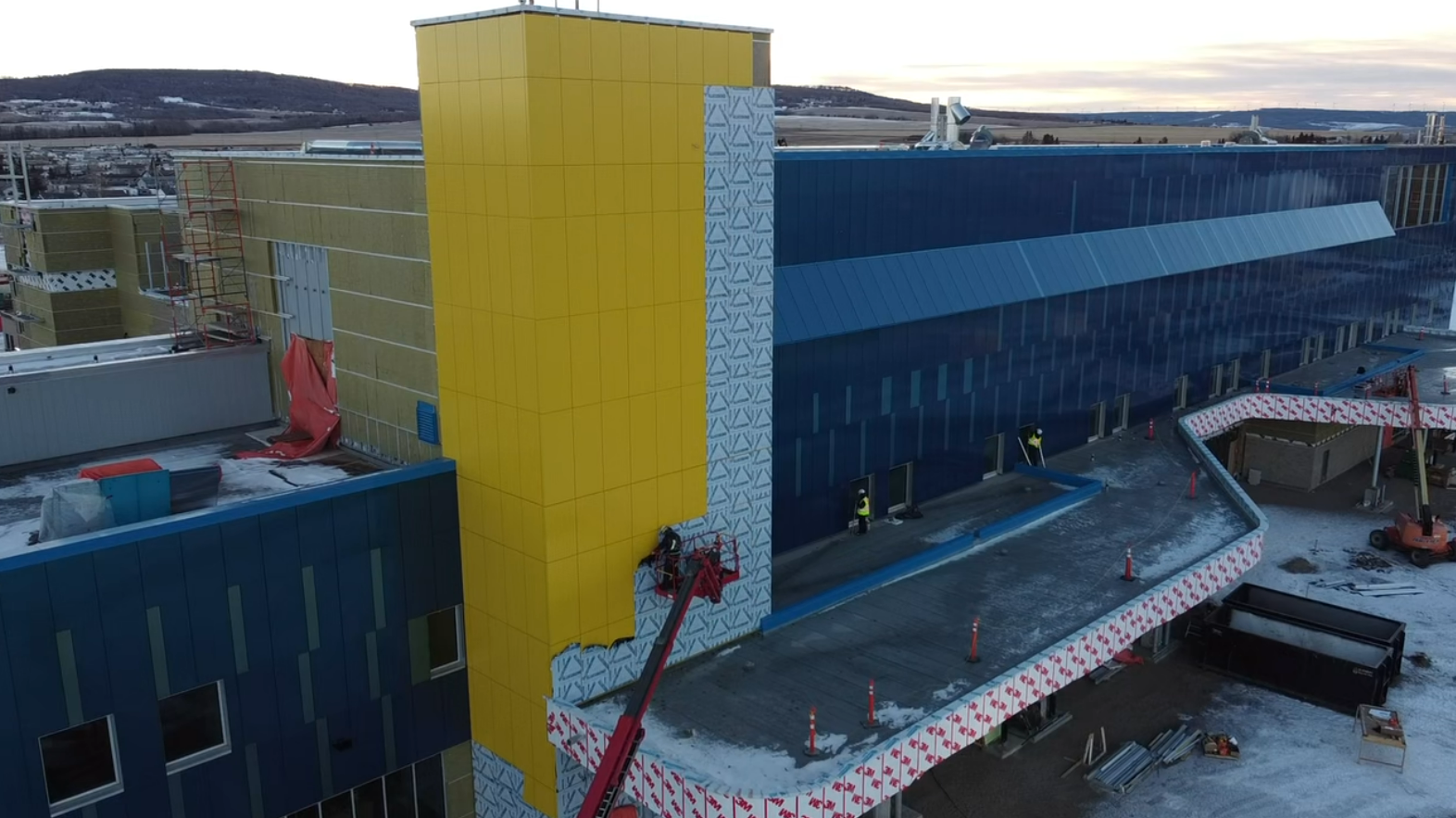
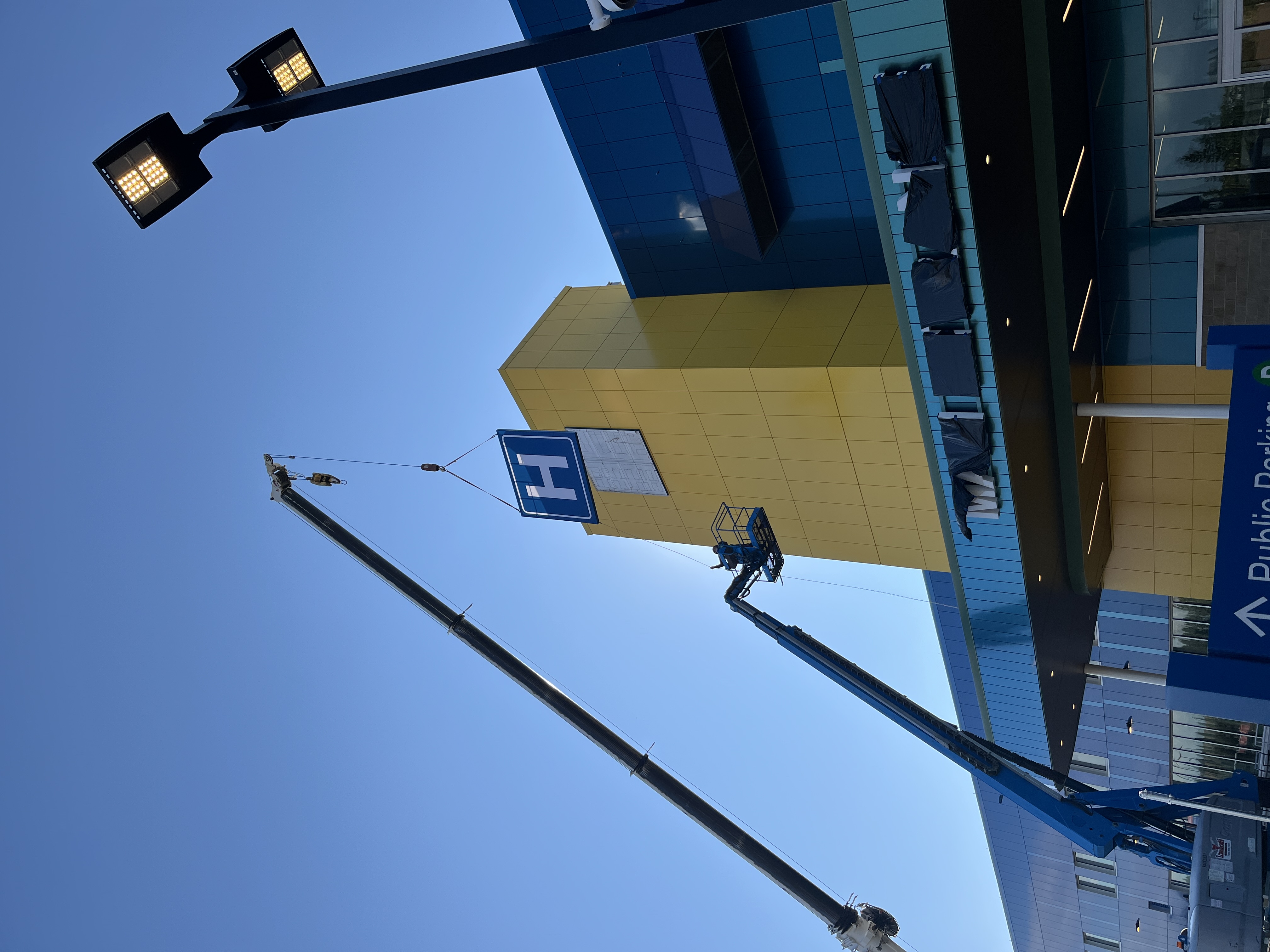
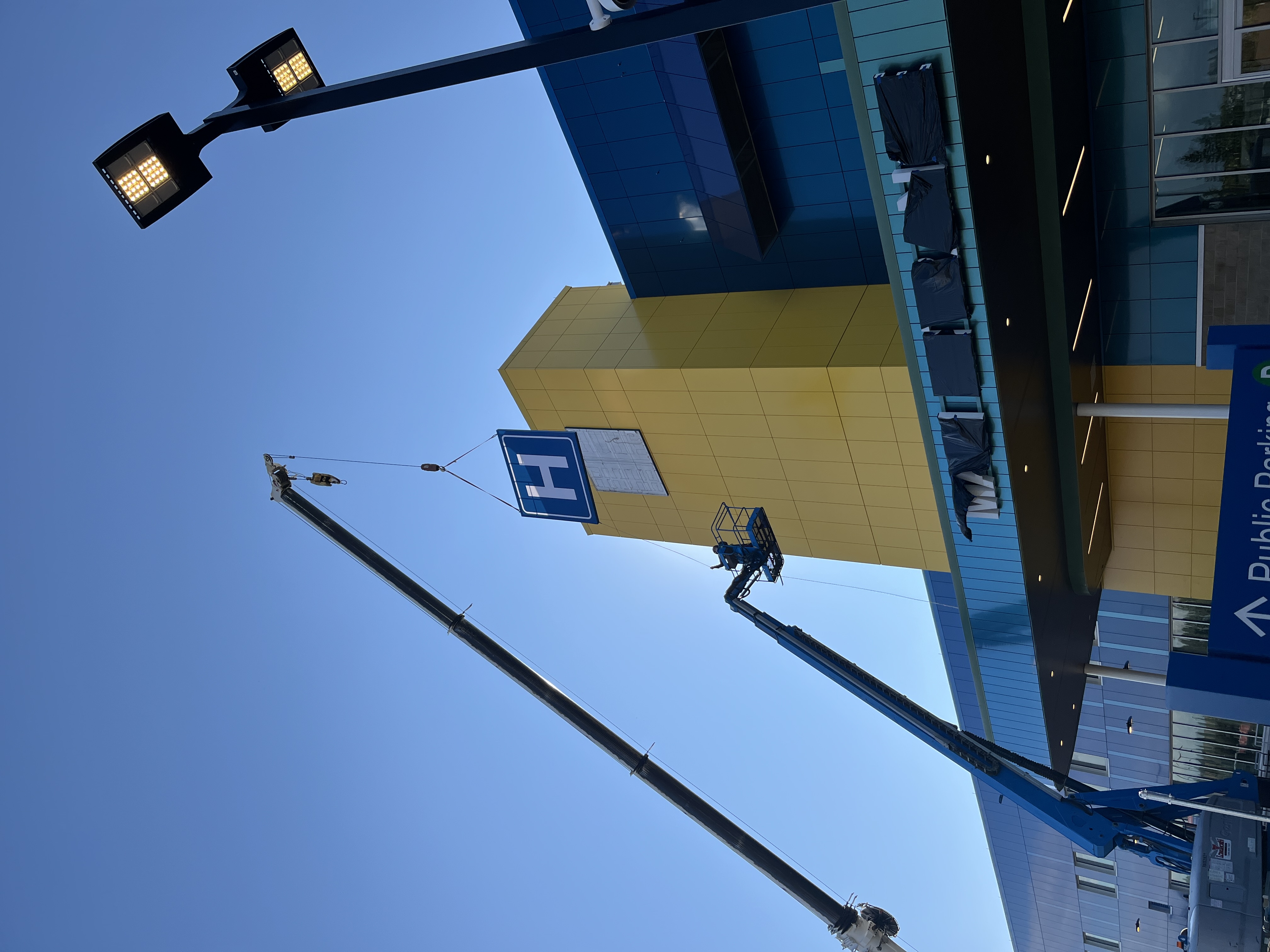
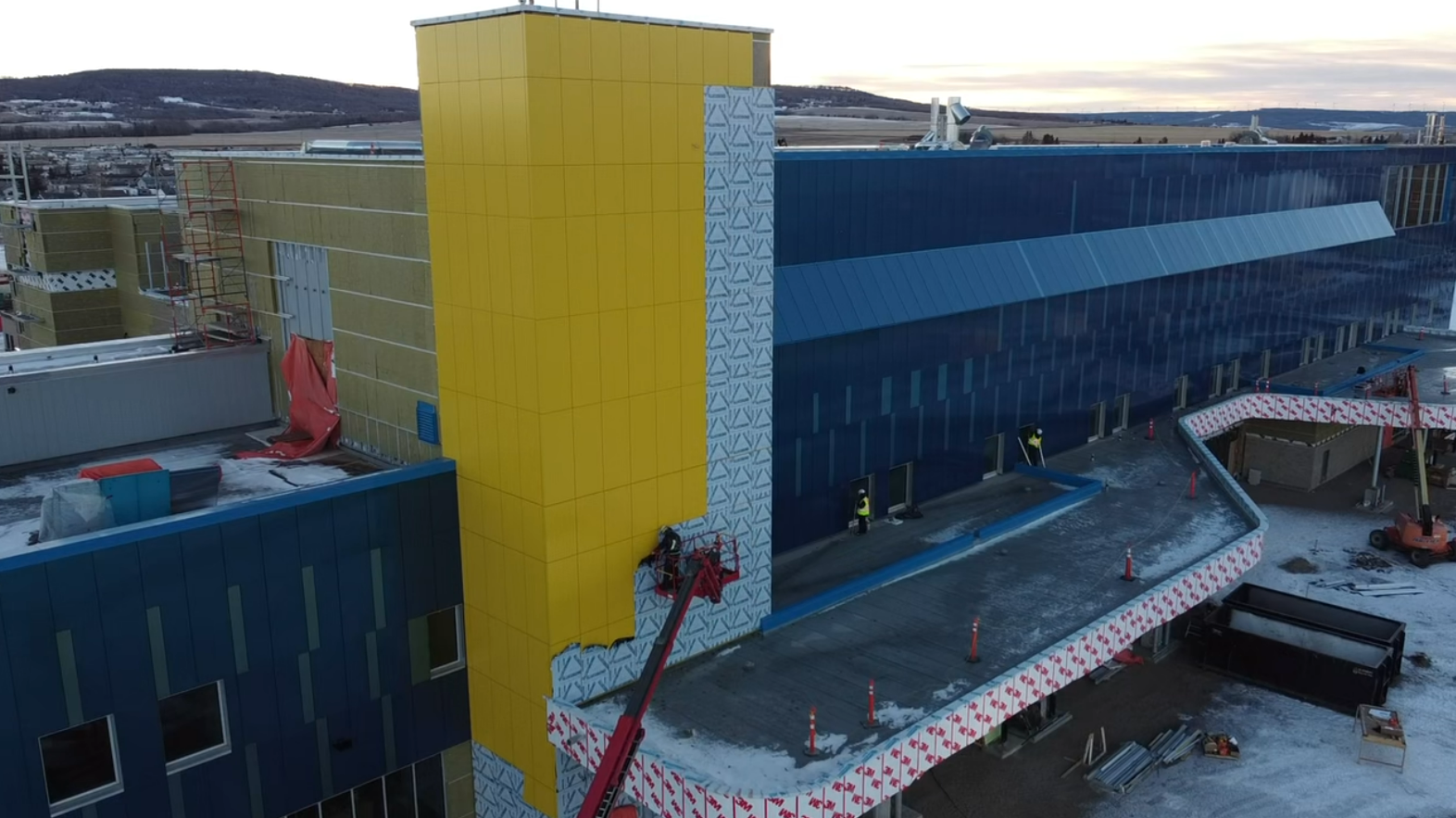
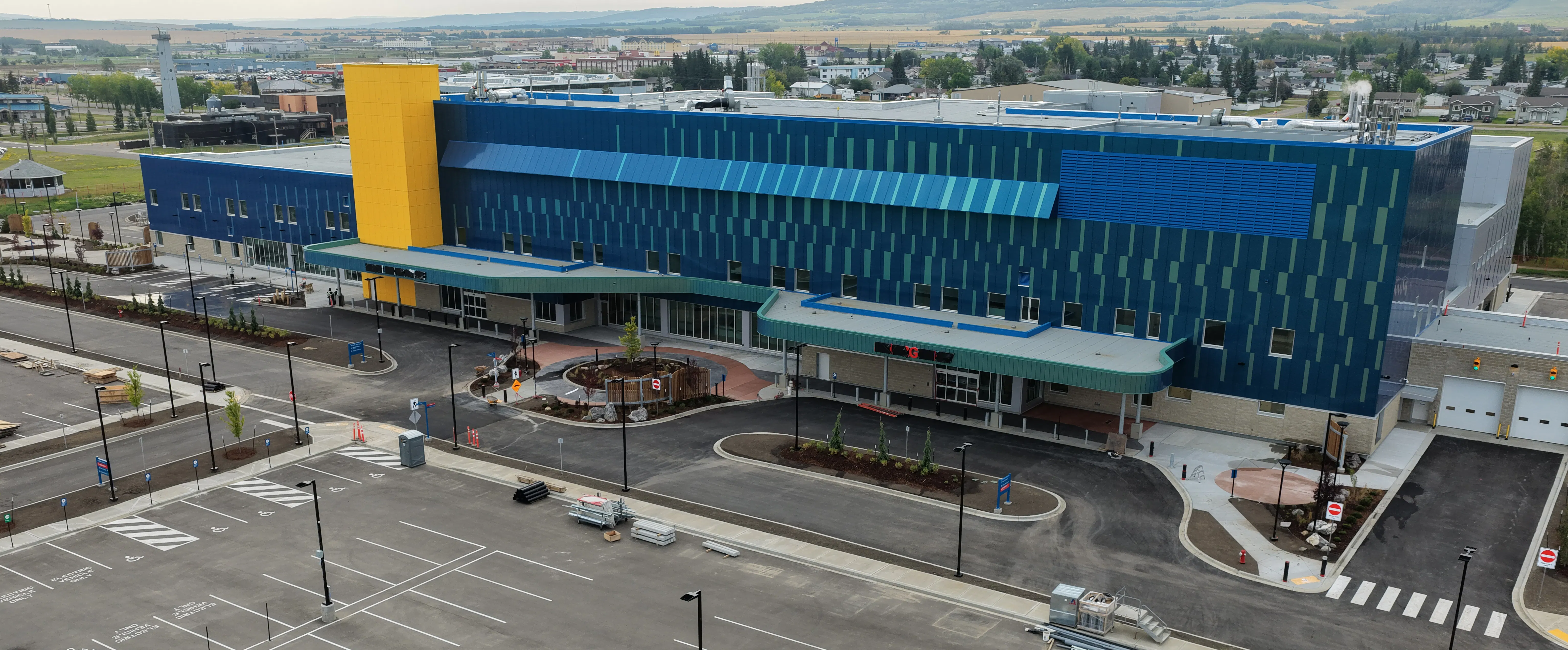
The new Dawson Creek and District Hospital continues to transform our skyline – and the latest milestone is hard to miss. Visible from most locations within the city, the reveal of the Tuscan Sun ACM panels adds a warm, golden hue to the building’s exterior.
The warm Tuscan Sun panels complete the hospital’s bold and meaningful exterior colour palette. This vibrant colour isn’t just for looks – it was chosen to complement the City of Dawson Creek’s logo and create a welcoming landmark for patients, families, and visitors. Positioned at the main entrance, the golden panels will help guide people to care while providing a striking contrast to the large “H” sign that will soon be installed.
WATCH: Video of the Tuscan Sun ACM panel reveal

The building now has its full, vibrant look which reflects the beauty and identity of our region:
- Ocean Blue = the vast Peace Region sky
- Lagoon = the northern lights dancing above us
- Tuscan Sun = Dawson Creek pride and a bright beacon for health care
As one of the tallest structures in Dawson Creek, the hospital’s exterior is a symbol of progress, care, and community pride.
Thank you for your contribution!
Help us reach out to more people in the community
Share this with family and friends
No thanks -
Mock-up #4: Refining patient care spaces through clinical engagement
Share Mock-up #4: Refining patient care spaces through clinical engagement on Facebook Share Mock-up #4: Refining patient care spaces through clinical engagement on Twitter Share Mock-up #4: Refining patient care spaces through clinical engagement on Linkedin Email Mock-up #4: Refining patient care spaces through clinical engagement link
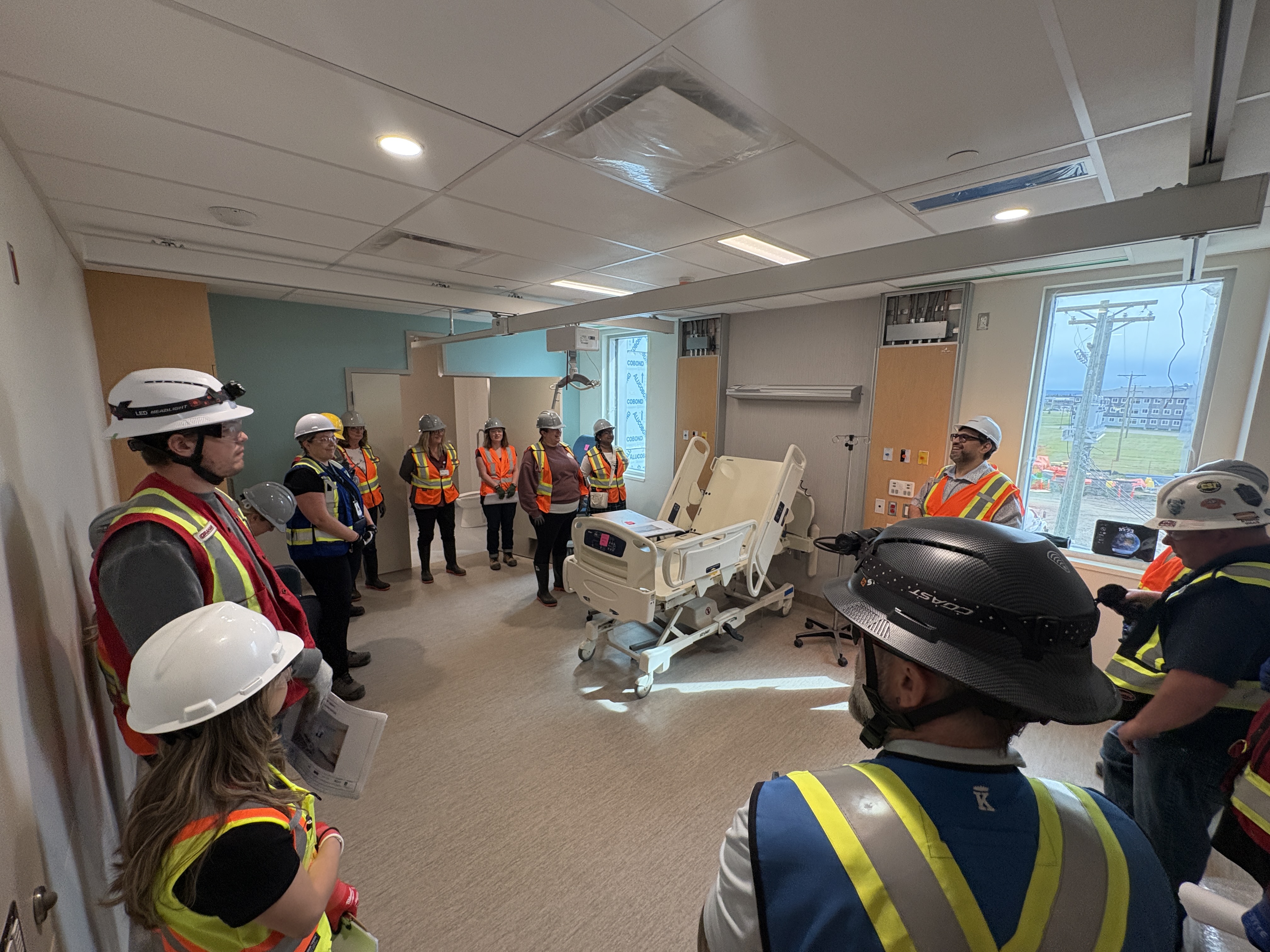
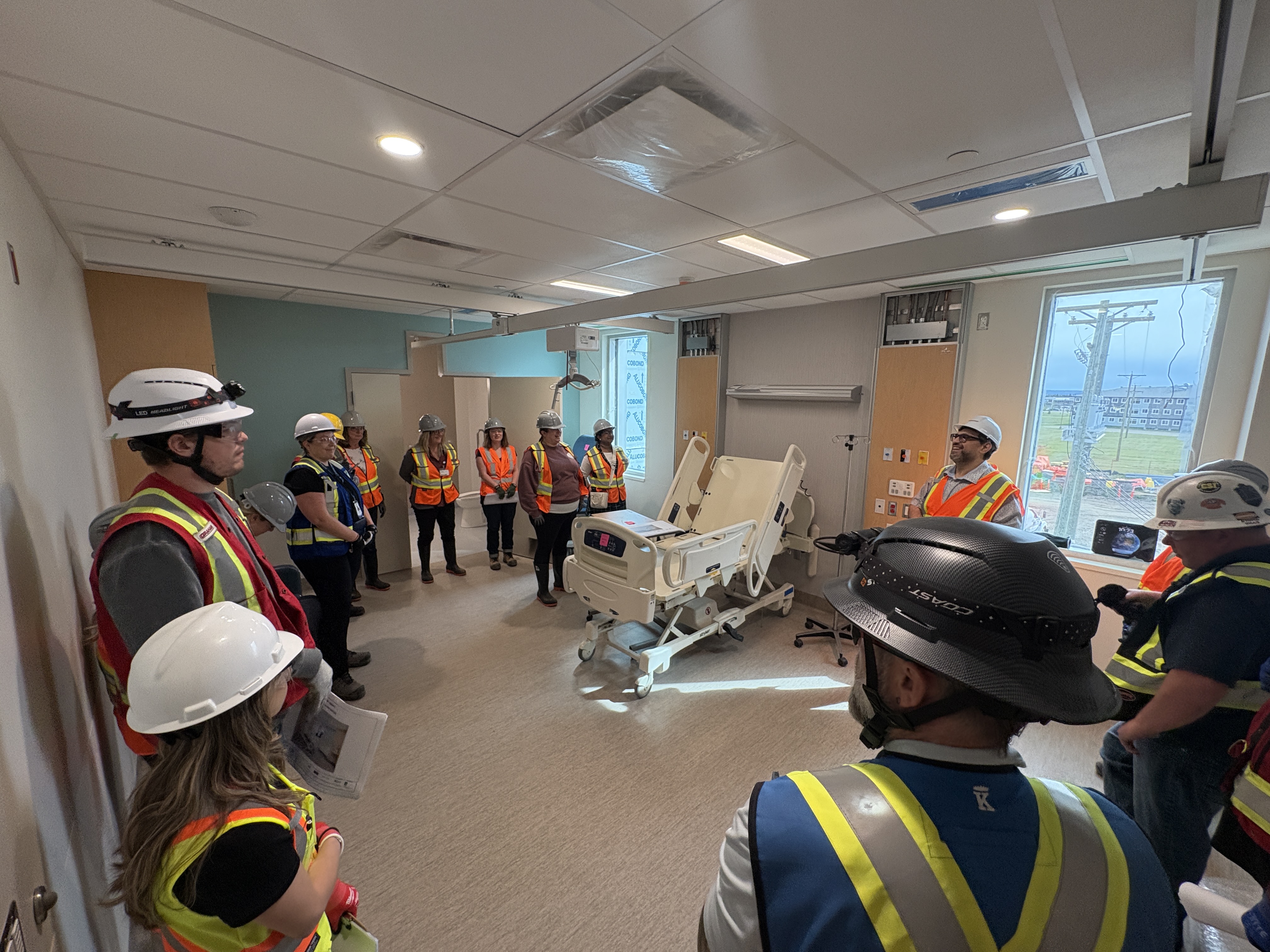
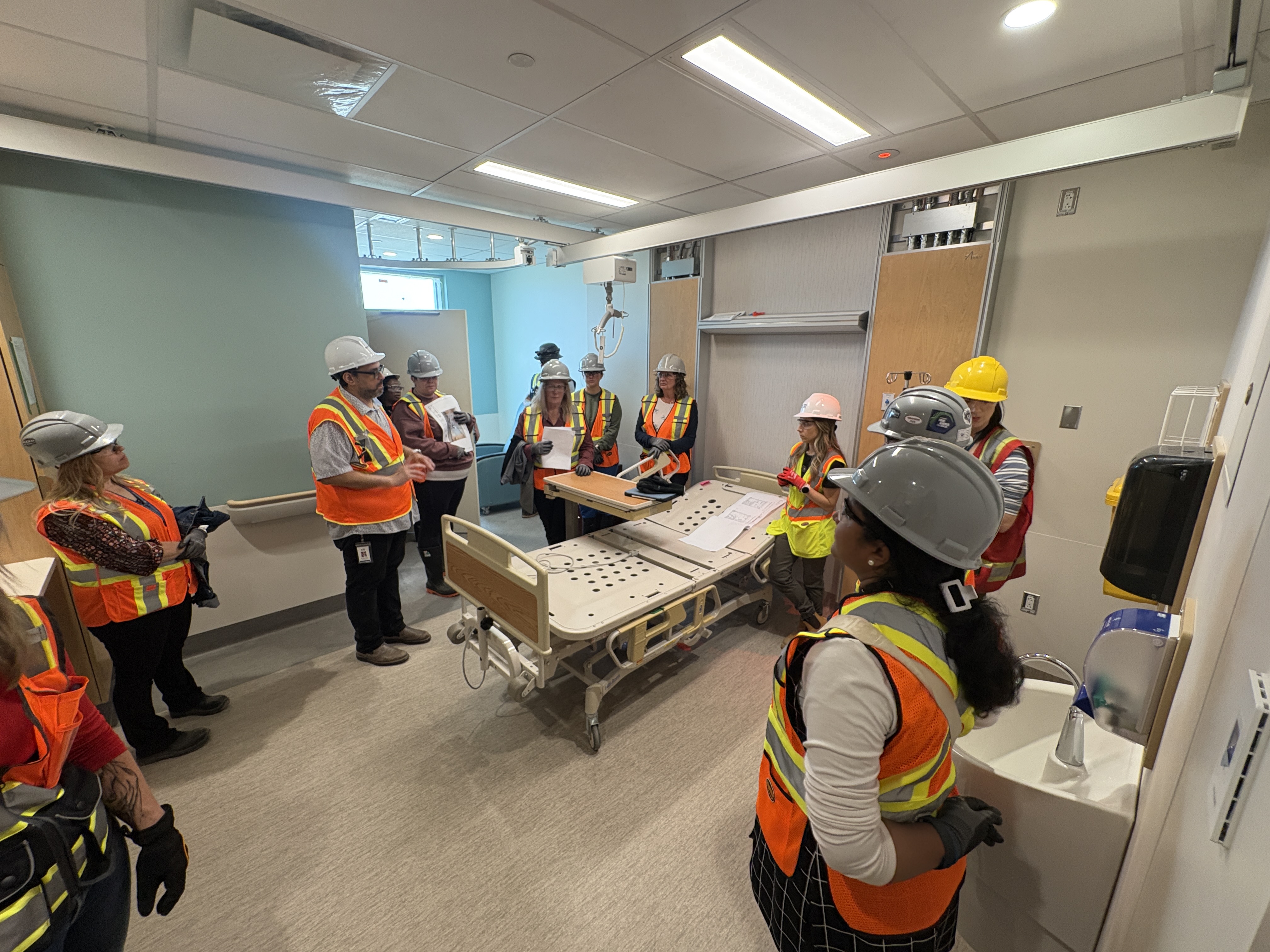
We’re thrilled to share an exciting milestone was recently achieved in the design and construction of the new Dawson Creek and District Hospital with the completion of our fourth mock-up session, which took place on-site and inside the new hospital!
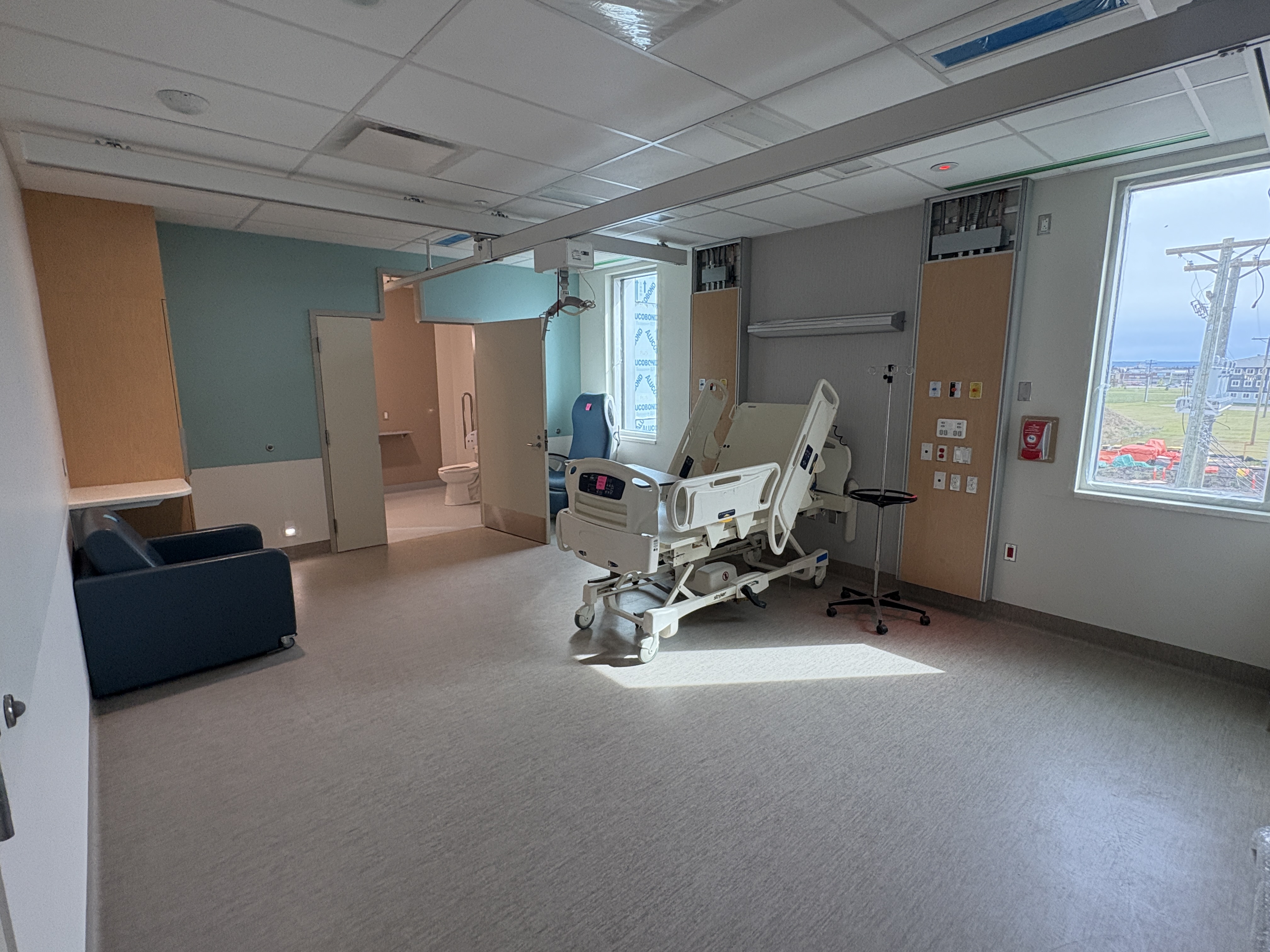
Mock-up #4 focused on two key spaces: a typical medical/surgical inpatient room and a typical bariatric patient room.
These mock-ups are immersive, hands-on experiences that give clinical users an opportunity to physically experience the space and provide real-time feedback on layout and functionality prior to construction being replicated throughout the facility. This approach enables identification of potential issues and supports evidence-based decision-making to ensure the final spaces are both operationally efficient and patient-centered.
These mock-up sessions are a vital part of our design and construction process, allowing us to refine room layouts based on the input of those who will work in these spaces every day. By inviting clinical staff to experience the rooms in-situ and provide feedback, we ensure that every detail is thoughtfully considered. The feedback gathered will directly inform final construction decisions, helping us build a hospital that truly reflects the needs of our staff.
During the mock-up, clinical users provided valuable insights on:
- Hand sanitizer placement for optimal accessibility and infection control
- Washroom grab bar types and locations to support patient mobility and safety
- Handrail placement throughout the room to assist with movement and fall prevention
- Workflow efficiency to streamline care delivery
Interested in learning more about the key features of patient rooms? Check out Highlight: Inpatient Rooms.
Photos from the typical bariatric patient room:


Photos from the typical medical/surgical inpatient room:


Thank you for your contribution!
Help us reach out to more people in the community
Share this with family and friends
No thanks -
A vibrant reveal of the exterior ACM panel colours
Share A vibrant reveal of the exterior ACM panel colours on Facebook Share A vibrant reveal of the exterior ACM panel colours on Twitter Share A vibrant reveal of the exterior ACM panel colours on Linkedin Email A vibrant reveal of the exterior ACM panel colours link
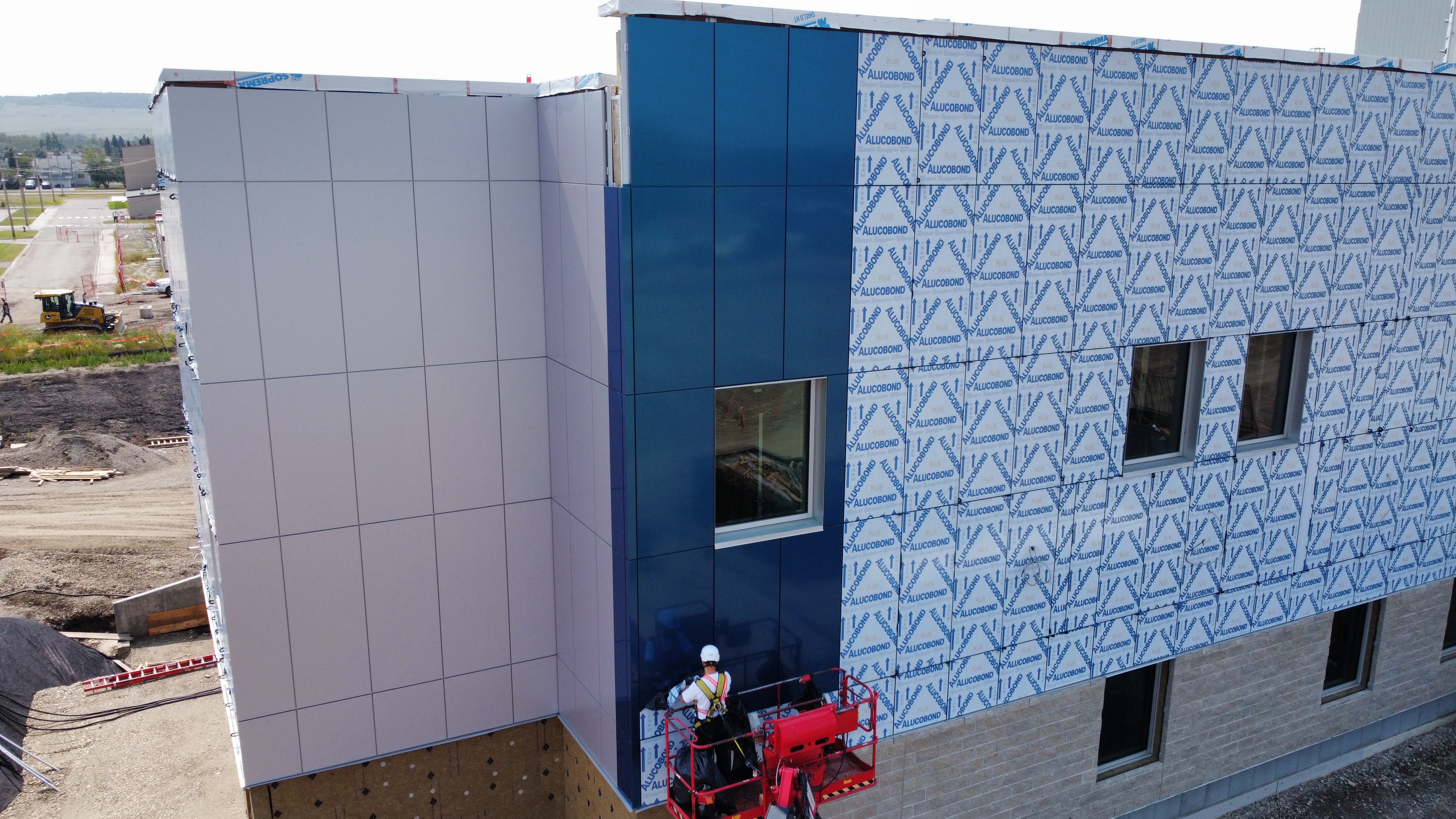
A vibrant new feature of the new Dawson Creek & District Hospital is catching the community’s eye: the building’s exterior colours.
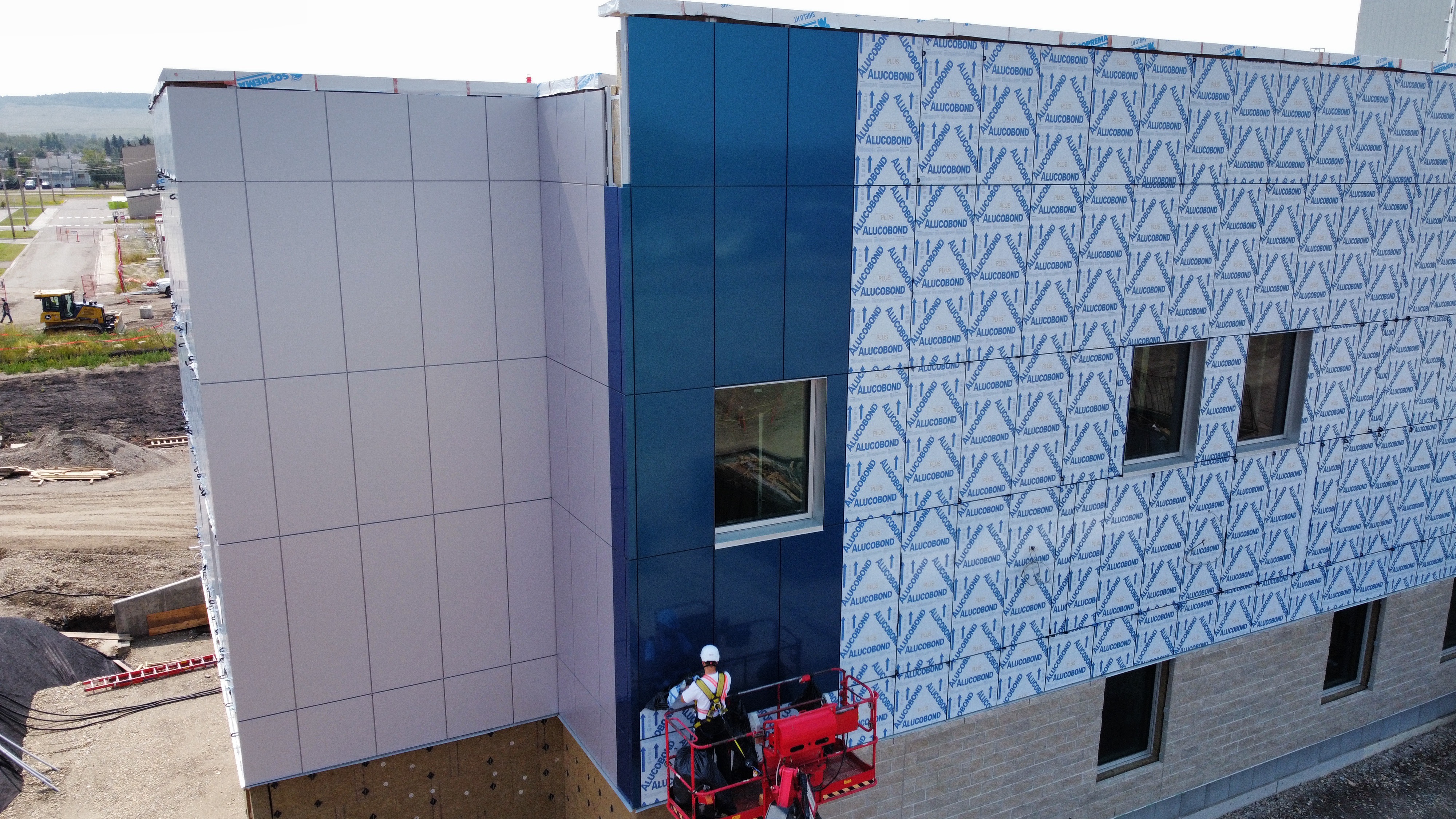
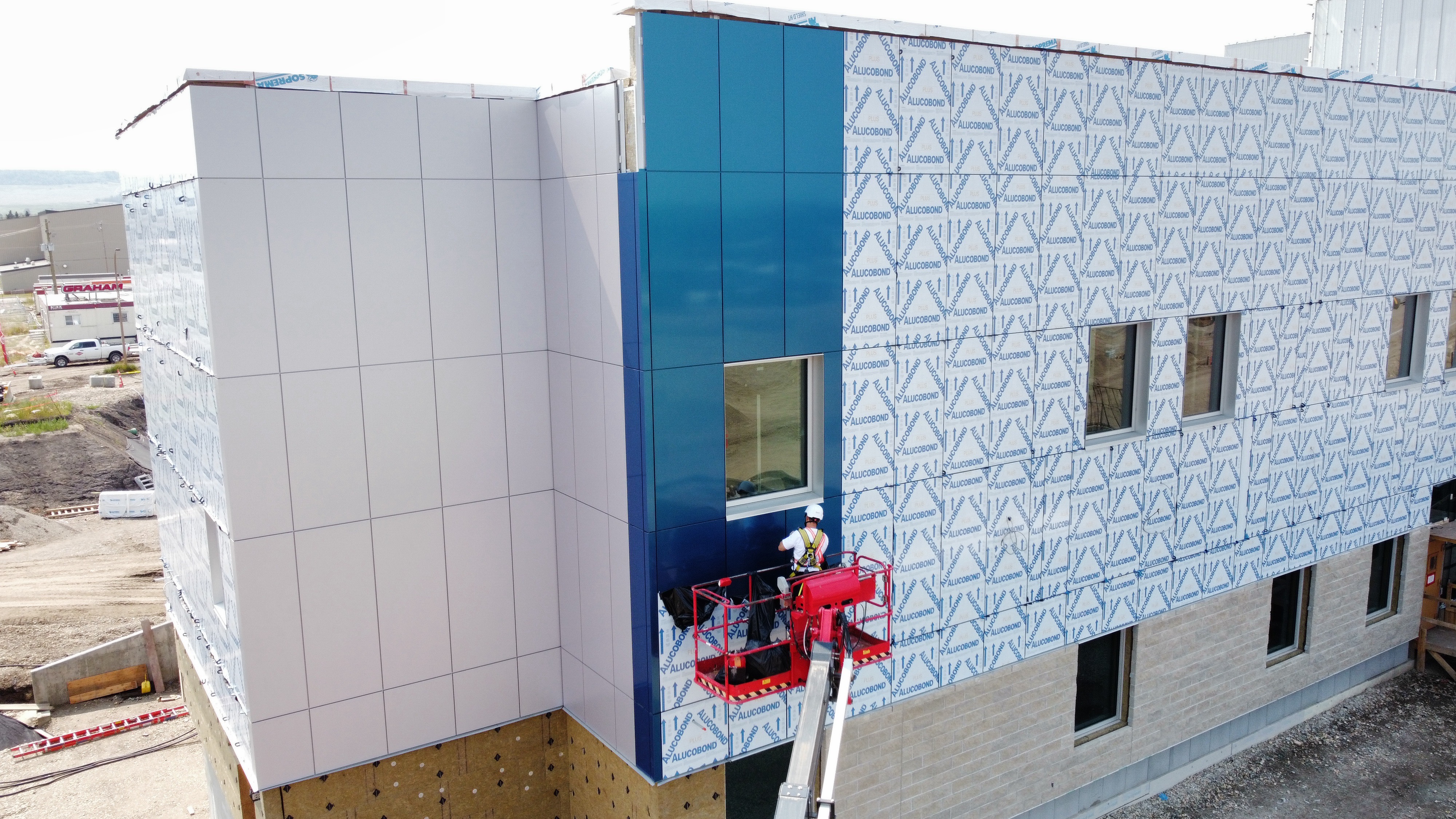
With majority of the aluminum composite material (ACM) panels now installed and the protective film getting peeled off, the building is quickly becoming a visible landmark on the city’s skyline.
The new hospital’s façade is being clad in Ocean Blue, Lagoon, and Tuscan Sun – a bold and meaningful palette that reflects Dawson Creek’s natural beauty, cultural identity, and northern spirit.
- Ocean Blue represents the vast Peace Region sky symbolizing openness, calmness, and clarity
- Lagoon captures the magic of the Aurora Borealis, a natural wonder often visible in the northern skies
- Tuscan Sun was chosen to complement the City of Dawson Creek’s logo and is intended to highlight the main entrance and stand out as an identifiable landmark
The chosen colours were thoughtfully selected to reflect Dawson Creek’s identity and to create a welcoming, recognizable space for patients, families, and staff. We are excited to hear that community members are already embracing the bold and meaningful palette.

Thank you for your contribution!
Help us reach out to more people in the community
Share this with family and friends
No thanks -
Farewell to Hank and Dan: Dawson Creek's Towering Heroes
Share Farewell to Hank and Dan: Dawson Creek's Towering Heroes on Facebook Share Farewell to Hank and Dan: Dawson Creek's Towering Heroes on Twitter Share Farewell to Hank and Dan: Dawson Creek's Towering Heroes on Linkedin Email Farewell to Hank and Dan: Dawson Creek's Towering Heroes linkAs the new Dawson Creek & District Hospital rises to meet the skyline, we say farewell to the two towering figures who have become local celebrities – Hank and Dan, the mighty tower cranes. These mechanical marvels have not only played a crucial role in the construction of our new hospital but have also captured the hearts and imaginations of our community.
Installed to help build the new hospital, Hank and Dan quickly became more than just construction equipment. They were symbols of the quick and exciting progress being made and were visible from almost every corner of Dawson Creek. Their presence sparked excitement and curiosity, turning a construction site into a community landmark.
The cranes' journey began when Ken Scott, a local nurse, named them Hank and Dan, after Vancouver Canucks legends, Henrik and Daniel Sedin. This transformed the cranes from cold, impersonal machinery into characters in the story of our new hospital. They became a topic of daily discussions with photos being posted of them on social media, children pointing them out and calling them the “Christmas Cranes”, and adults appreciating their engineering expertise.
On November 14, we said goodbye to Hank (tower crane #1) as he was carefully dismantled and removed from the site. Yesterday, December 4, we also said goodbye to Dan (tower crane #2). Their departure marks the end of an era but also reminds us of the power of progress as we look forward to the opening of the new Dawson Creek & District Hospital in Spring 2027.
So, here's to Hank and Dan – our towering heroes. Thank you for lifting our spirits and helping build a brighter future for health care in Dawson Creek.
Thank you for your contribution!
Help us reach out to more people in the community
Share this with family and friends
No thanks -
Mock-up #3 in the Quonset hut
Share Mock-up #3 in the Quonset hut on Facebook Share Mock-up #3 in the Quonset hut on Twitter Share Mock-up #3 in the Quonset hut on Linkedin Email Mock-up #3 in the Quonset hut link
Last week, Graham Design Builders LP submitted the 95% design and hosted the third round of mock-ups inside the Quonset hut.
Read more about ‘what’s inside the Quonset hut’.
Mock-up #3 consisted of a fully constructed bariatric inpatient bedroom and washroom and isolation room and anteroom. These rooms included sample materials and finishes, millwork locations, key pieces of equipment, IMIT device and power receptacle locations, and furniture. Leadership representatives were able to experience key features of the design, provide feedback and input, and make design decisions.
In addition to the constructed rooms, they reviewed window blinds, the layout of a medication room and the layout of the LDRP washroom and birthing tub.
Mock-up #4 will be a prototype of an inpatient bedroom and washroom and bariatric room which will include all materials, services, millwork, finishes, equipment and furniture. It’ll be constructed in its actual location within the new facility and reviewed at various stages of construction.
Photos from inside the isolation room and anteroom


Photos from inside the bariatric inpatient room and washroom


Photos from inside the medication room

Photos from inside the LDRP washroom with the birthing tub


Photo of the window blinds review

Thank you for your contribution!
Help us reach out to more people in the community
Share this with family and friends
No thanks -
Level 1 suspended slab pours
Share Level 1 suspended slab pours on Facebook Share Level 1 suspended slab pours on Twitter Share Level 1 suspended slab pours on Linkedin Email Level 1 suspended slab pours link
We’re excited to share that concrete pours for the Level 1 (L1) suspended slab are underway! The first pour was done on January 25 and the remaining pours will continue until mid-April. Once all 10 pours for L1 are complete, ~2510m3 of concrete will have been poured.

Fun fact: Heidelberg Materials, Dawson Creek is supplying all of the concrete for the suspended slabs and CanaSteel Rebar Services, Dawson Creek is supplying and installing all the reinforcing steel.
Suspended slabs are upper floor concrete slabs that are not in direct contact with the ground. The slab is supported on the exterior of the building by foundation walls and on the interior by concrete columns.
In anticipation for the suspended slab pours, Graham had to complete the foundations that serve as the supporting structure of the slab. This installation involves:
- Mudsill installation – Lumber used to support shoring. Mudsills distribute the shore load across an area big enough to not exceed the allowable soil bearing pressures.
- Shore Installation – Vertical support designed to carry the weight of the formwork, reinforcing bar, concrete and live loads. All engineered to known and assumed loads. For DCDH, we are using an engineered tower system.
- Beam Installation – Aluminum beams for horizontal formwork that are supported by the shores.
- Joist Installation – Horizontal formwork installed perpendicular to and supported by the beams. The form facing material (plywood) is placed directly on the joists.
- Formwork installation – The sheathing or plywood as mentioned above is what the concrete will be placed against.
For the most part, the shoring is built in place. The beam, joist and formwork are pre-assembled as much as possible and flown in place using one of the two tower cranes on site. Infills are then completed after the prefabricated pieces are installed.

The L1 suspended slab formwork is a tower system, so after the slab section has been poured, the beam, joists, and formwork will be removed and used on future pours. The shores will be lifted and individual reshore posts will be placed for the duration of all of the suspended slab pours for all levels.
As usual, there is a lot of preparation work that goes into the suspended slab pours beforehand. In addition to engineering and picking an appropriate system, extensive planning for heating and hoarding is required to ensure the concrete cures properly. For suspended slabs, heating comes from the bottom which allows the concrete to be placed and finished and then the top of the slab is covered with tarps to keep the concrete at the right temperature and prevent moisture evaporation.
The size of the pours are also pre-planned to accommodate:
- Concrete supply capabilities – Slab sizes are based on the amount of concrete that can be received in a 6-to-8-hour window
- Reinforcing steel laps and layout – Splices in rebar can impact structural integrity and increase loads outside of design parameters
- Engineered control and expansion joints – Allow for shrinkage or movement
- Crew availability and floor requirements – Levelness, flatness and finishes all have different levels of support and manpower required
- Ambient air temperature, heating and hoarding
The Level 2 and Level 3 suspended slabs consist of 18 pours (9 per level) totalling over 5000m3 (2500m3 per level) of concrete. Level 2 is anticipated to occur from March to May and Level 3 is anticipated from April to July.


Thank you for your contribution!
Help us reach out to more people in the community
Share this with family and friends
No thanks -
Shovels in the ground!
Share Shovels in the ground! on Facebook Share Shovels in the ground! on Twitter Share Shovels in the ground! on Linkedin Email Shovels in the ground! link
It's official! Ground has been broken on the site of the new hospital. A small group gathered yesterday to dig the ceremonial hole and celebrate the start of construction, although they had a bit of help from the excavator.
Pictured from left to right: Bart DeVries (DCDH PMO), Kate Kustak (DCDH Foundation), Deb Taylor (DCDH PMO), Brette Madden (DCDH Foundation), John Kurjata (Northern Health Board of Directors), Maciej Paszkowski (Graham), Mayor Darcy Dober (City of Dawson Creek), Richard Bygrave (DCDH PMO), Director Leonard Hiebert (PRRHD), Nathan Salomon (DCDH PMO), Kendra Kiss (Northern Health), Dave Corcoran (Graham), Fern Hansen (DCDH Auxiliary), Margaret McGillis (Northern Health), Jennifer Dunn (DCDH PMO), Ramona Daly (DCDH PMO), and Ashley Pannozzo (DCDH PMO). 


Thank you for your contribution!
Help us reach out to more people in the community
Share this with family and friends
No thanks -
Photos: Minister of Health Adrian Dix's announcement in Dawson Creek
Share Photos: Minister of Health Adrian Dix's announcement in Dawson Creek on Facebook Share Photos: Minister of Health Adrian Dix's announcement in Dawson Creek on Twitter Share Photos: Minister of Health Adrian Dix's announcement in Dawson Creek on Linkedin Email Photos: Minister of Health Adrian Dix's announcement in Dawson Creek link
On Monday, June 26, Minister of Health Adrian Dix visited Dawson Creek to announce the selection of the preferred proponent and signing of the Design Build Agreement for the new Dawson Creek & District Hospital. A large group of stakeholders, partners, and community members joined him on this beautiful sunny morning.

Bev Lambert, First Nations Health Council and representative for the Treaty 8 Chiefs
Shannon Anderson, Northern Health Board of Directors
Leonard Hiebert, Chair, Peace River Regional Hospital District
Darcy Dober, Mayor, City of Dawson Creek
Dr. Magda Du Plessis, Medical Director, Northern Health
Cathy Ulrich, CEO, Northern Health & Adrian Dix, Minister of Health
DCDH Project Team with Cathy Ulrich and Adrian DixThank you for your contribution!
Help us reach out to more people in the community
Share this with family and friends
No thanks